People still search best time to visit Albania as if one calendar covers the country. It does not.
The Riviera, Theth and Valbona, and a cheap city week run on three clocks. Season is the first filter. Then pick the clock that matches the trip.
Albania is not in the EU and not in Schengen. The Bank of Albania’s monetary unit is the lek (ALL). The euro is not legal tender. Pay in lek.
Short verdict: May–June or September–October for most trips. July–August if the point is a swim week and you accept heat, crowds, and fire alerts. Winter for Tirana, Berat, and Gjirokastër — not for a first-timer high-pass hike.
Theth/Valbona vs Riviera vs budget (three clocks)
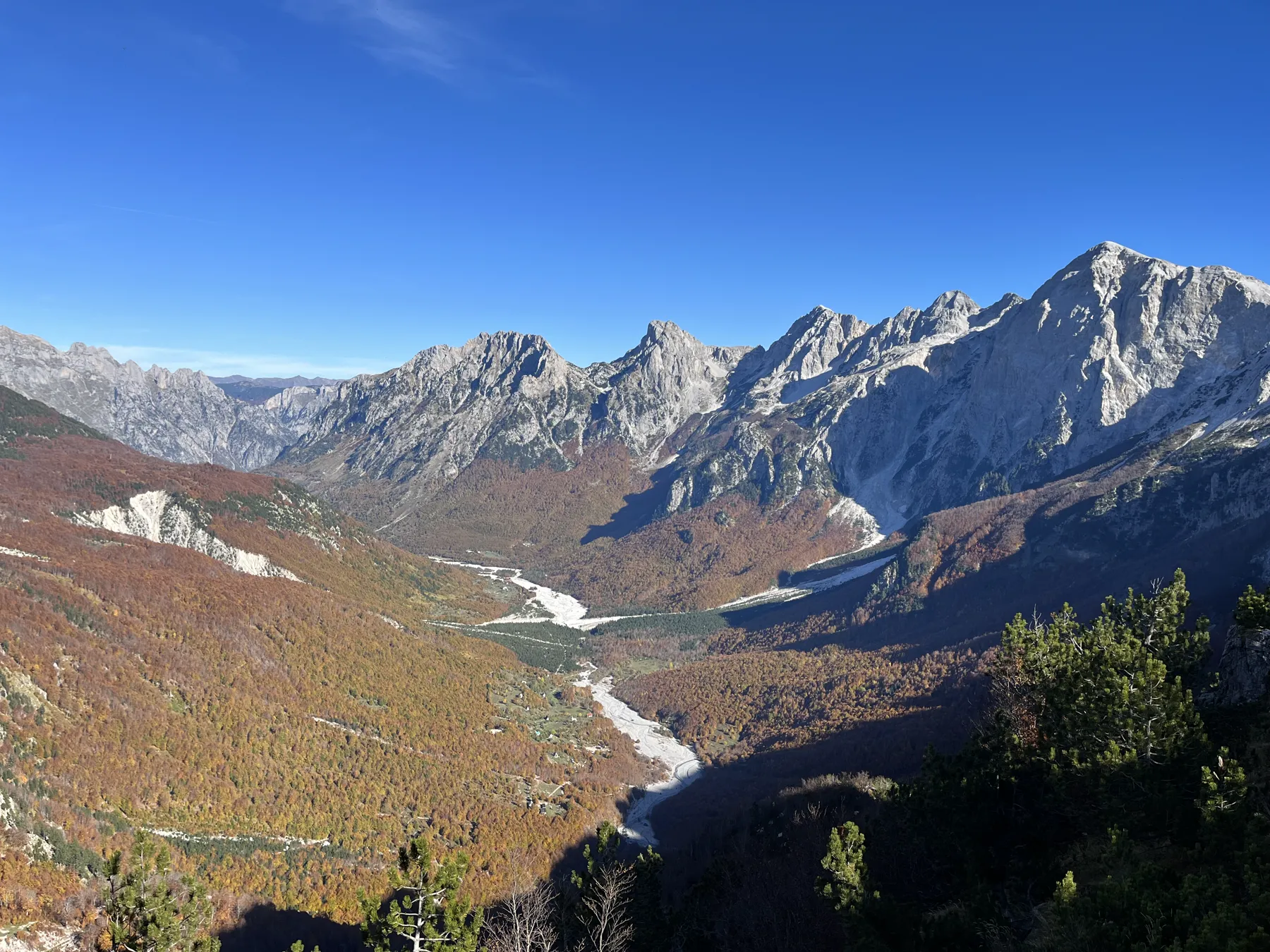
Treat Albania as three products that share a passport stamp.
Clock 1 — Albanian Alps (Theth / Valbona). This is a summer walk. Climate-Data.org classifies Theth as Cfb, not the coastal Csa. The village mean is 7.9 °C for the year. January averages −2.3 °C. August, the warmest month, averages 18.3 °C. Annual precipitation is about 1,777 mm — far wetter than Tirana. The UK FCDO warns that heavy snowfall in the mountains disrupts transport from December to February. A May booking that assumes Valbona Pass is clear is a bet. Ask a guesthouse before you lock the north. The Komani ferry is a seasonal service, not a winter commuter boat.
Clock 2 — Albanian Riviera. This is the swim-and-drive coast from Vlorë down through Himarë and Sarandë to Ksamil. Climate-Data.org puts Vlorë’s annual mean at 16.9 °C, with August the warmest month at 26.8 °C average (daily max 31.9 °C) and January the coolest at 7.9 °C. July and August are the driest months, each around 32 mm. The best time to visit Albanian Riviera is June and September. Late July and August work if you book early, start walks at dawn, and treat fire alerts as real. May is strong on land; the sea still lags. October is quieter and wetter.
Clock 3 — budget week. August on the Ionian is the expensive week. May, late September, and October cut the rate without closing the country. Winter is cheapest if the trip is cities and food, not swimming and high passes. Pay in lek. Mountain villages and furgon drivers are cash. A euro price on a beach menu is a convenience fee.
| Clock | Best window | Caution | What “open” means |
|---|---|---|---|
| Alps (Theth / Valbona) | Late June–September, once the pass is locally confirmed | Snow on the high crossing; guesthouses close in autumn | Marked trail, beds, and a way in and out |
| Riviera | June and September; early July if booked | Late July–August crowds, heat, fire alerts | Swim days, SH8 daylight drives, Butrint |
| Budget / cities | May, late Sep–Oct; winter for Tirana–Berat–Gjirokastër | August coast; winter Alps | Lek prices, empty rooms, city museums |
Do not run all three clocks in seven days. Ten days is the first time a shortened north and a coast stretch can both fit. Build the mix from the Albania country hub.
Albania weather by month
Albania weather by month is a coast-versus-mountain problem, not a single national average.
The World Bank Climate Change Knowledge Portal puts Albania’s mean annual temperature at 11.6 °C, with average monthly temperatures ranging from about 1 °C in December–January to 21 °C in July–August, and mean annual precipitation at 1,019.8 mm. Most of that rain falls November–March. June–September is the drier stretch. The national mean is pulled down by the mountains. It is not what you feel on a Sarandë promenade.
Climate-Data.org station pages, in brief: Tirana 14.8 °C annual mean and 1,136 mm rain; Vlorë 16.9 °C and 1,079 mm; Theth 7.9 °C and 1,777 mm. August is the warmest month at all three. November is the wettest.
Tirana monthly snapshot (Climate-Data.org — averages, not a 2026 forecast):
| Month | Avg °C | Max °C | Rain mm | Trip note |
|---|---|---|---|---|
| Jan | 5.2 | 9.8 | 104 | Cities only. Alps are winter. |
| Feb | 6.5 | 11.2 | 107 | Still a city month. |
| Mar | 9.6 | 14.6 | 112 | Museums, food, some coast walks. |
| Apr | 13.3 | 18.2 | 108 | UNESCO towns work. Pass still a snow question. |
| May | 17.5 | 22.2 | 86 | First consensus window opens on land. |
| Jun | 21.8 | 26.5 | 49 | Coast and, later in the month, Alps. |
| Jul | 24.4 | 29.3 | 33 | Heat, crowds, fire season peak. |
| Aug | 24.7 | 29.9 | 33 | Hottest, busiest, driest. |
| Sep | 20.2 | 25.1 | 96 | Second consensus window. |
| Oct | 15.9 | 20.8 | 118 | Early month coast; rain returns. |
| Nov | 11.5 | 16.1 | 150 | Wet. Cities. |
| Dec | 6.7 | 11.1 | 140 | Cities. Mountain snow. |
Vlorë runs warmer than Tirana in summer. Theth runs far colder in every month that matters for hiking. Do not pack one bag for both.
Climates to Travel’s Vlorë sea-surface table is the swimming lag: about 18 °C in May, 22 °C in June, 24 °C in July, 25 °C in August, 24 °C in September, 21 °C in October. The sea trails the air by a few weeks. That is why Albania in May feels like late spring on the promenade and still brisk in the water, and why Albania in September is the warmer swim of the two shoulders.
Albania in May and June
Albania in May is the first month most first-timers should consider. The Riviera is green. Beach clubs are opening, not full. Berat and Gjirokastër are comfortable walking towns. The catch is the north. Theth’s May average is 11.5 °C, with 142 mm of precipitation (Climate-Data.org). Residual snow on Valbona Pass is a local condition. Message the guesthouse. If the pass is not clear, walk valley trails or skip the crossing.
June is the first month that can serve both clocks if you sequence them. Vlorë’s June average is 23.9 °C (Climate-Data.org). The sea, per Climates to Travel, is around 22 °C. Book the north first, then drop to the coast. You still pay in lek. You just fight fewer people for the same room.
July and August: heat, density, fire
July and August are when the country looks empty on a postcard and feels crowded on the ground.
Climate-Data.org puts Vlorë’s July–August averages at 26.6–26.8 °C (max 31.5–31.9 °C). Those are monthly means, not heatwave spikes. Rain sits at the year’s floor. Theth is cooler (July 17.9 °C, August 18.3 °C) but valleys still bake at midday. Start the crossing early.
Wildfire is a planning fact. The UK FCDO says wildfires are common in Albania from April to October. Starting one is a criminal offence. EFFIS mapped 49,189 hectares from 453 fires in 2024, “the most extreme for the last 6 years,” with the largest burns mostly in July and August. In 2025 Albania activated the EU Civil Protection Mechanism three times — 6 July (Finiq), 21 July (Vlorë and Dibër), and 6 August — and closed that emergency on 17 August (EEAS). Check AKMC / IGEO fire-danger notices the morning you drive a forested ridge. Do not treat a dry verge as a picnic site.
If August is the only leave you have, do not centre the week on a Saturday in Ksamil at noon. Swim early. Keep a city day as Plan B if a valley road closes. Roads, heat, and taxis are the practical safety layer. See Is Albania safe?.
Albania in September and October
Albania in September is the second consensus month, and for many coast trips the better one. Vlorë’s September average is 22.2 °C (Climate-Data.org). Rain returns, but the sea, per Climates to Travel, is still around 24 °C. Crowds thin after mid-month. Do the Alps in the first half of September if the north is the point.
Albania in October splits in two. Early October can still be a Riviera week if you accept cooler water (Climates to Travel: about 21 °C at Vlorë) and some rain. Climate-Data.org gives October 118 mm in both Tirana and Vlorë. Theth’s October average is 9.3 °C, with 151 mm. That is not a first-timer pass month. Use October for Berat, Gjirokastër, Tirana, and a last swim in the south.
November is the wettest Climate-Data month at all three stations. It is a city month. December–February add the FCDO’s northern flooding window and mountain snow.
Best time to visit Albanian Riviera, in practice
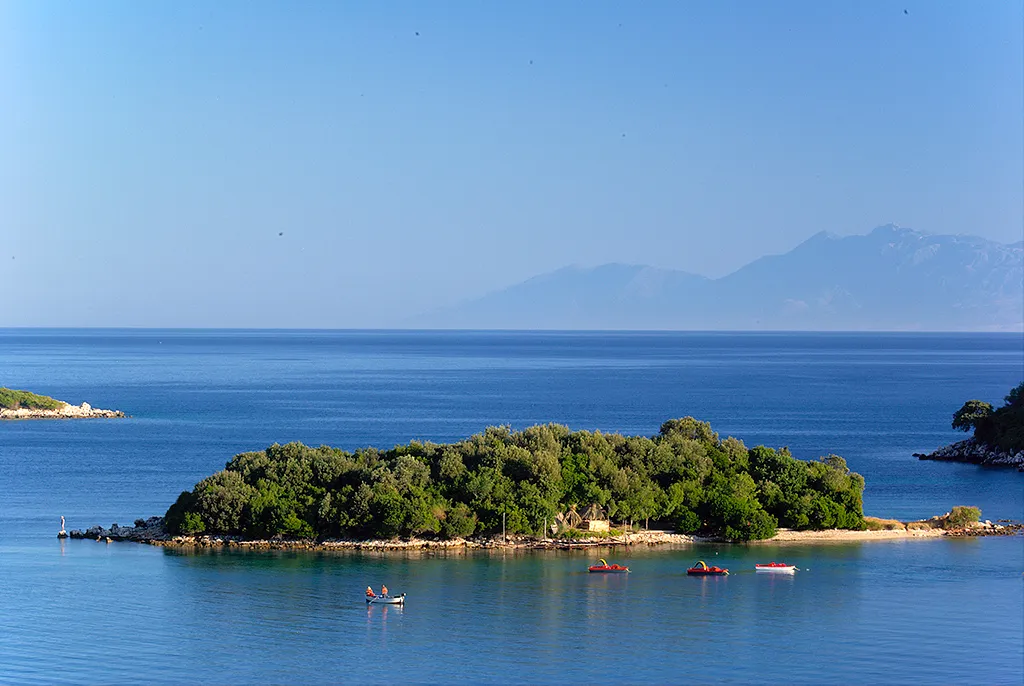
Sequence a coast week as daylight driving. The SH8 and the Llogara climb are not night roads for a first rental. Give Ksamil a half-day or one night unless the islands are the trip. Pair the south with Butrint.
July–August sea is the warmest (Climates to Travel: 24–25 °C at Vlorë). It is also the week the parking, the boats, and the fire map all tighten. Valid as a swim week. Not the quiet one in the photos.
Money, visas, and what season does not change
Albania is not in the EU, not in the eurozone, and not in Schengen. Your Schengen 90/180 clock and Albania’s clock are separate. The Bank of Albania: “The monetary unit in the Republic of Albania is the Albanian ‘Lek’.” Carry cash in the mountains. Choose lek at the ATM.
Visa rules depend on the passport. Many nationalities enter visa-free for a short stay. US citizens, per the State Department country page, may enter as tourists without a visa and stay up to one year without a residency permit. That is not a work permit. Confirm before you fly.
If Albania is one week of a longer loop, start with season, then country order, in the Balkans travel guide.
Key takeaways
- Consensus best time to visit Albania: May–June and September–October for most independent trips.
- Three clocks: Alps (summer, snow-dependent), Riviera (June and September), budget (shoulder and winter cities).
- Albania weather by month is station-specific. Tirana is not Theth.
- July–August: heat, crowds, and the EFFIS/EEAS fire peak. FCDO wildfire window is April–October.
- Albania in May is strong on land; Albania in September is the warmer-sea shoulder; Albania in October is early-month coast and cities.
- Pay in lek. Albania is not in the EU.
FAQ
What is the best time to visit Albania in 2026?
May–June and September–October for most 7–14 day trips. Use July–August only if a swim week is the point. Use winter for cities.
Is May a good time to visit Albania?
Yes, for Tirana, UNESCO towns, and the Riviera on land. Climate-Data May in Tirana averages 17.5 °C. The sea still lags (Climates to Travel: about 18 °C at Vlorë). Confirm Valbona Pass locally before you add Theth–Valbona.
Is September a good time to visit Albania?
Yes. Vlorë’s September average is 22.2 °C (Climate-Data.org). The sea is still near August. Crowds drop after mid-month. Do the Alps in the first half if you need the pass.
What about Albania in October?
Early October can still work on the Riviera if you accept rain and cooler water. Climate-Data.org puts October rain at 118 mm in both Tirana and Vlorë. It is a weak month for a first-timer high-pass hike.
What is the best time to visit the Albanian Riviera?
June and September. Early July if rooms are booked. Late July–August for the warmest sea and the most people.
Can you hike Theth to Valbona in May?
Only if a local host says the pass is clear that week. Climate-Data.org’s Theth May mean is 11.5 °C with heavy precipitation. May is shoulder, not a guarantee.
Is July or August too hot?
For a coast-and-Alps first trip, they are the hardest months: highest Climate-Data maxes, driest weeks, peak crowds, and the EFFIS fire peak. Workable as a dedicated swim week with a fire plan.
Do I pay in euros or lek?
Lek (ALL). The Bank of Albania names the lek as the monetary unit. Albania is not in the eurozone. Tourist desks often take euros at a worse rate.
Internal links and next steps
Next: pick the month, then the route. The Albania hub, the safety page, Ksamil, and the regional Balkans guide are linked once in the sections above.
Plot coast versus Alps on the calendar before you book the middle week. The wrong month costs more than a bad hotel.
Sources
Climate
– Climate-Data.org, Tirana: https://en.climate-data.org/europe/albania/tirana/tirana-714992/
– Climate-Data.org, Vlorë: https://en.climate-data.org/europe/albania/vlora/vlora-831/
– Climate-Data.org, Theth: https://en.climate-data.org/europe/albania/theth/theth-469575/
– Climate-Data.org, Albania overview: https://en.climate-data.org/europe/albania-68/
– World Bank Climate Change Knowledge Portal, Albania country profile (1991–2020 climatology; mean 11.6 °C, 1,019.8 mm): https://climateknowledgeportal.worldbank.org/country/albania/climate-data-historical
– World Bank / GFDRR, Albania climate country profile PDF: https://climateknowledgeportal.worldbank.org/sites/default/files/country-profiles/15812-Albania%20Country%20Profile-WEB.pdf
– Climates to Travel, Albania (Vlorë sea-surface monthly table): https://www.climatestotravel.com/climate/albania
– Institute of Geosciences (IGEO), meteorology / monthly climatic bulletin: https://geo.edu.al/Services/Department_of_Meteorology/Monthly_Climatic_Bulletin/
Wildfire, snow, official travel
– UK FCDO, Albania safety and security (wildfires April–October; mountain snow / northern flooding December–February): https://www.gov.uk/foreign-travel-advice/albania/safety-and-security
– EFFIS / European Commission JRC, Advance report on Forest Fires in Europe, Middle East and North Africa 2024 (Albania: 49,189 ha, 453 fires, mostly July–August): https://data.effis.emergency.copernicus.eu/effis/reports-and-publications/effis-related-publications/advance_report_on_forest_fires_in_europe_middle_east_and_north_africa_2024.pdf
– EEAS, “United in response, EU Assistance in Albania’s summer wildfires” (UCPM activations 6 July, 21 July, 6 August 2025): https://www.eeas.europa.eu/delegations/albania/united-response-eu-assistance-albania%E2%80%99s-summer-wildfires_en
– US Department of State, Albania International Travel Information: https://travel.state.gov/content/travel/en/international-travel/International-Travel-Country-Information-Pages/Albania.html
Money and status
– Bank of Albania, Currency issue (“The monetary unit in the Republic of Albania is the Albanian ‘Lek’”): https://www.bankofalbania.org/About_the_Bank/Core_functions/Currency_issue.html