Montenegro vs Croatia is a football search. This page is the other one: which Adriatic coast to book in 2026.
Verdict: choose Croatia for islands and a ferry network. Choose Montenegro for Boka Kotorska, a short driving coast, and a lower typical daily spend. Do both in July or August only if a land border is in the plan — Debeli Brijeg–Karasovići is a reported 2–5 hour wait on peak summer days, not a 40-minute hop. If the budget is the point and islands are not, Albania is the cheaper third coast.
Criteria at a glance
| Criterion | Croatia | Montenegro |
|---|---|---|
| Coast | Mainland plus 1,244 islands, islets and rocks | 293.5 km; Boka plus the Budva–Ulcinj shore |
| Signature | Island-hopping on scheduled ferries and catamarans | Bay of Kotor (UNESCO cultural landscape) |
| Currency | Euro (eurozone since 1 Jan 2023) | Euro (unilateral since 2002; not eurozone) |
| EU / Schengen | Yes (EU 2013; Schengen 1 Jan 2023) | No (EU candidate; not Schengen) |
| EES | Live at external Schengen borders (air, sea, land) | Not in EES; you still hit EES entering or leaving Croatia |
| HR–ME summer border | Debeli Brijeg if you combine coasts | Same crossing; reported 2–5 h in peak summer |
| Crowd centres | Dubrovnik, Split, Hvar | Kotor, Budva, Porto Montenegro |
| Main coastal airports | Split, Dubrovnik, plus Zadar, Pula, Rijeka | Tivat (coast), Podgorica (inland) |
| Book this coast if | The trip is islands | The trip is one bay, compact roads, lower spend |
Islands versus Boka
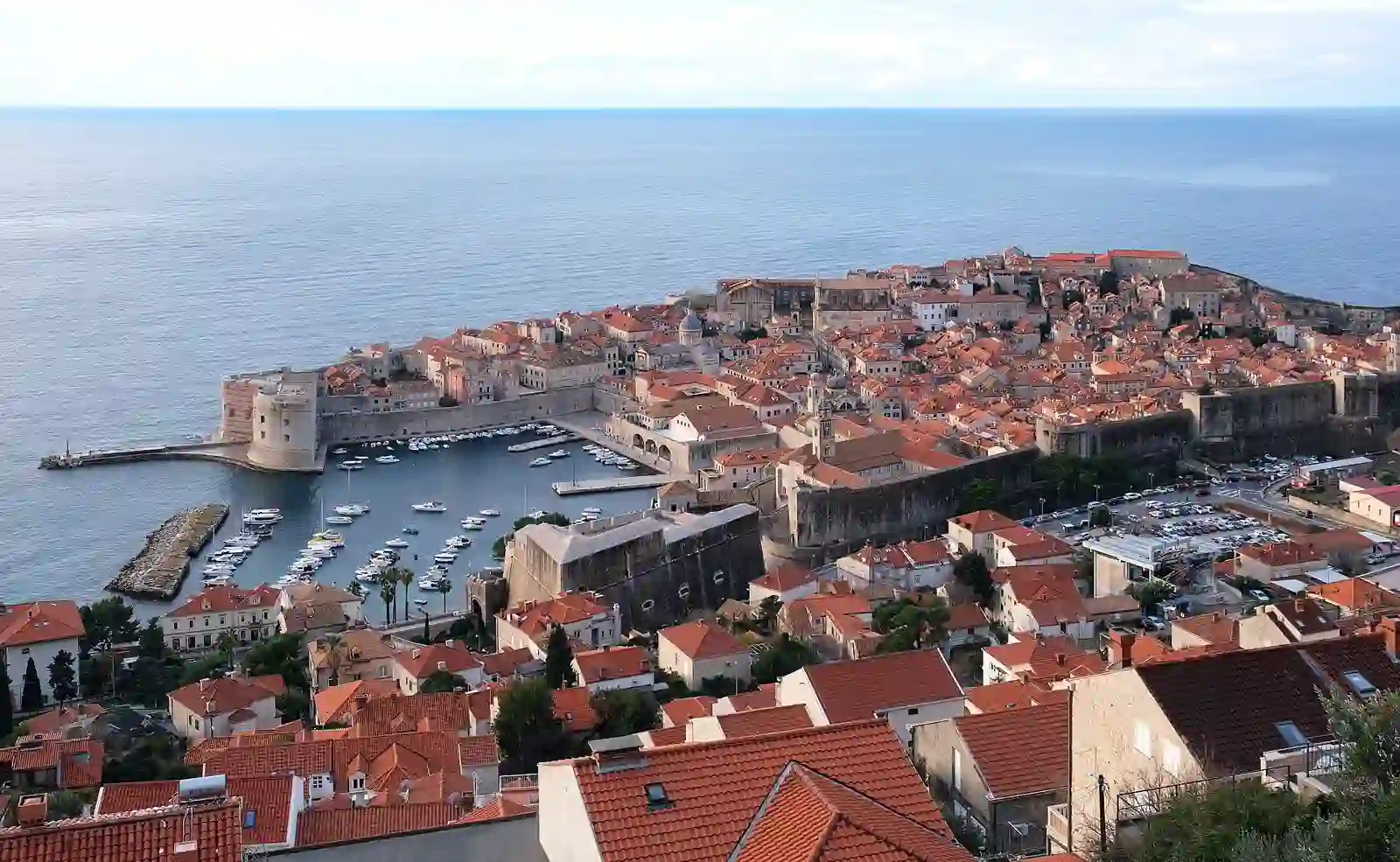
The useful split is not “which country is prettier.” It is islands versus Boka.
Croatia’s shoreline is an archipelago. The Croatian island register lists 1,244 islands, islets and rocks. The Bureau of Statistics puts sea-coast length at 6,278 km (4,398 km islands, 1,880 km mainland). That is why Croatia’s island coast is a ferry product: Jadrolinija runs the car-ferry backbone; catamarans fill passenger routes from Split and Dubrovnik. You sleep on an island. The mainland is a hub.
Montenegro does not offer that product. MONSTAT lists the coastline at 293.5 km. The set-piece is Boka Kotorska, a mountain-walled bay — often compared to a fjord, officially a bay. UNESCO inscribed the Natural and Culturo-Historical Region of Kotor in 1979 for the towns and their fit to the terraced slopes, not for a chain of swimming islands. Our Lady of the Rocks and Sveti Stefan are postcard islets, not a hop network. Budva, Bar and Ulcinj are a driving coast. That is not Dalmatia with a different flag.
If the fantasy is “a new island every two days,” montenegro or croatia is not a close call. Croatia is the island coast. Montenegro is the bay coast. Read Montenegro’s short Adriatic shore when the bay is the point.
The Kamenari–Lepetane ferry across the Verige strait is a local shortcut inside Boka, not an island network. Treat it as traffic relief, not as Hvar.
Kotor vs Dubrovnik
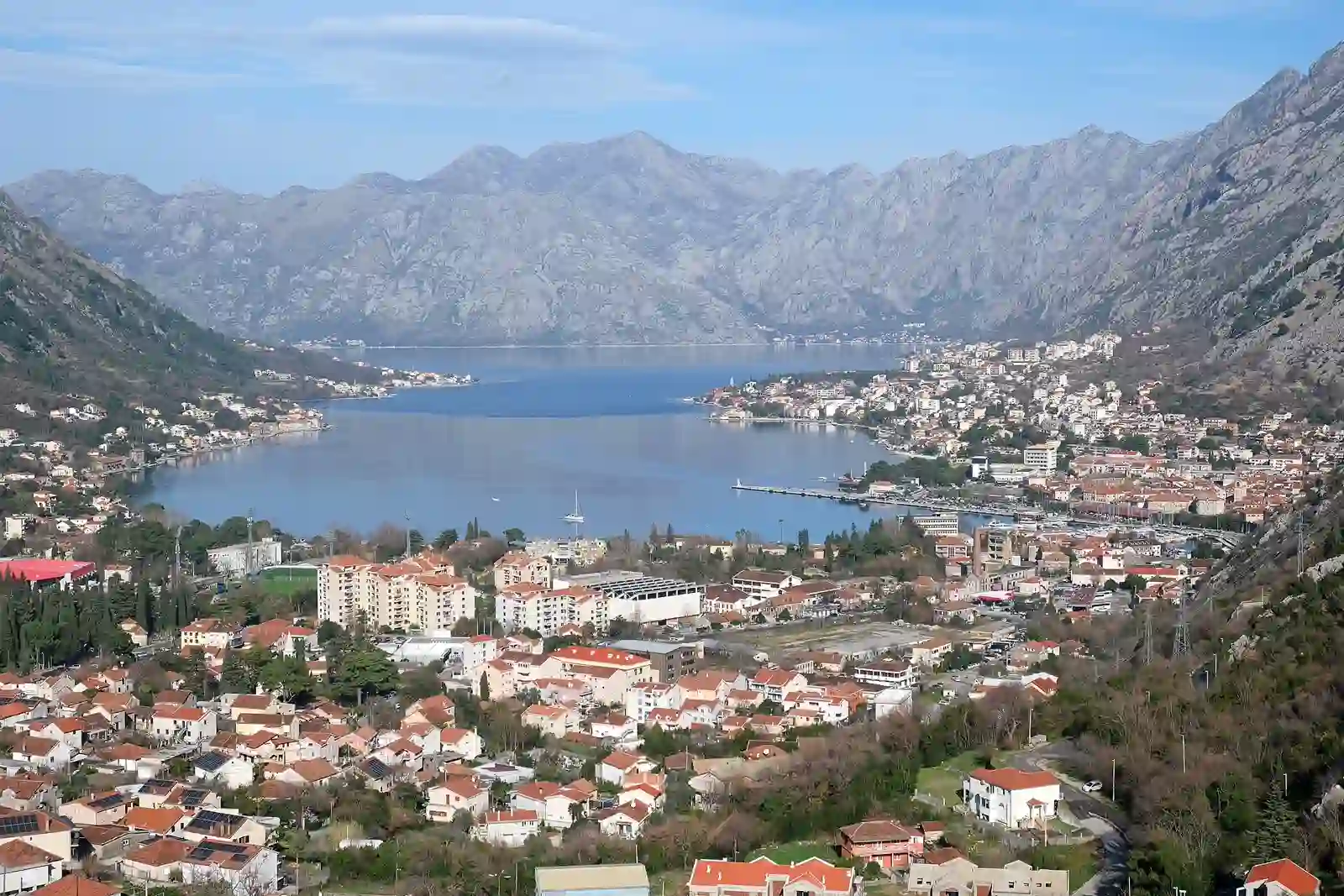
Kotor vs Dubrovnik sits under the country question. Both old towns went onto the World Heritage list in 1979. They are not interchangeable.
Dubrovnik is a walled city on the open Adriatic: walls, limestone streets, Lokrum, and a cruise-and-day-trip load the city has tried to cap. It is the most expensive Croatian coastal brand. Dubrovnik Airport (DBV) is why many Montenegro weeks start in Croatia — then stall at the border.
Kotor sits at the head of the inner bay. Water, cliffs, Perast, and the fortifications above the old town do more of the work. Cruise ships call here too. The town is smaller. The setting is the UNESCO property, not only the streets.
Pick Dubrovnik for a maritime republic on a cliff, and pay for it. Pick Kotor for a bay you can drive or boat in a day. A high-summer hop between them is a border day, not a casual outing.
Prices: same euro, different bill
Both coasts take euro cash and cards. That is where the similarity ends.
Croatia is in the euro area. Euro banknotes and coins have been legal tender since 1 January 2023. Montenegro is not in the eurozone. It unilaterally adopted the euro in 2002 after the Deutsche Mark. Travellers spend the same notes. The legal status is different. There is nothing to exchange between the two coasts.
National crowd-sourced living costs, not hotel tariffs, from Numbeo (Croatia last update 30 August 2026; Montenegro 29 August 2026):
- Cost of living excluding rent: Montenegro 16.1% lower than Croatia
- Restaurants: 14.2% lower
- Inexpensive restaurant meal: €12 (HR) vs €10 (ME)
- Mid-range meal for two, three courses, no drinks: €60 vs €45
Those figures mix inland cities with the coast. Zagreb is not Dubrovnik. Podgorica is not Kotor in July. Tourist-coast prices sit above that table. 2025–2026 visitor reporting commonly describes Dalmatian-coast beds and plates as roughly a fifth to two-fifths above equivalent Boka or Budva standards — a range of reports, not an index. Peak Dubrovnik and Hvar sit at the top. Porto Montenegro and the high end at Sveti Stefan can match Croatian luxury. Everyday konoba and guesthouse prices usually do not.
Estimates, 2025–2026 visitor prices, high-season coast, per person per day (hostel/simple private room, two meals, local transport — not a suite, not self-catering only):
| Band | Croatia (estimate) | Montenegro (estimate) |
|---|---|---|
| Lean / hostel-style | €55–90 | Often reported ~20–35% less |
| Mid-range private room + restaurants | €100–160 on the hot Dalmatian strip | Usually below that band; luxury marinas are the outlier |
Treat those as planning bands with a year on them, not quotes. Month and bed move the bill more than the country average. Confirm live hotel prices before you lock flights. Croatia’s card coverage is broader in tourist zones; Montenegro still wants cash for some boats, taxis, and small konobas.
Schengen, EES, and the 90/180 clock
This is the rule that catches montenegro vs croatia travel more than scenery does.
Croatia is EU (since 1 July 2013) and Schengen (since 1 January 2023). Days there count toward the 90 days in any 180-day period that third-country nationals get in the Schengen area, added to France, Spain, Italy, and the rest. Croatian MFA: time in Croatia is added to time in other Schengen states.
Montenegro is not Schengen and not EU. Days in Montenegro do not use the Schengen 90. US citizens: visa-free up to 90 days in a 180-day period under Montenegrin rules (State Department). EU citizens: 90 days with a passport, 30 days with a national ID card (Government of Montenegro visa page). Those clocks are separate. Crossing Debeli Brijeg is leaving or entering Schengen, not a county line.
The Entry/Exit System (EES) is live. The European Commission set full operation for 10 April 2026, after a progressive start on 12 October 2025. It registers non-EU nationals on short stays at external borders: travel-document data, facial image, fingerprints, and the entry/exit record. From full operation it replaces passport stamping for those travellers. EU/EEA citizens are not the third-country enrolment case.
Croatia’s land crossings with Montenegro are those external borders. HRT reported EES at all 77 international Croatian BCPs from 1 March 2026, ahead of the EU-wide date. First enrolment can add time to a summer car line. Do not invent a minute count.
ETIAS is a different programme (pre-travel authorisation). As of late August 2026 it was not in operation; the EU had not published a replacement start date after dropping the late-2026 target. Do not mix ETIAS paperwork into an EES queue.
If the Schengen 90 is tight after a spring in Italy or Greece, Montenegro (and Albania) still give you Adriatic days that do not debit that allowance. Croatia does not.
Debeli Brijeg in summer
The main road between Dubrovnik and Herceg Novi is one crossing with two names: Debeli Brijeg on the Montenegrin side, Karasovići on the Croatian side. It is open 24/7. It is the bottleneck.
Reported summer waits: 2–5 hours on peak July–August days, especially weekends and the late-morning window when Dubrovnik day-trips overlap through-traffic. That is a reported range from 2026 guides and queue services, not a stopwatch study for this page. Off-season waits are often described as tens of minutes.
A smaller road crossing exists at Vitaljina (Croatia) / Kobila–Konfin (Montenegro). It is widely described as quieter and typically limited to passenger cars. Confirm vehicle class before you leave the highway. It is not a truck-and-bus alternative.
Practical rules, not folklore:
- Passports for the table. EU ID cards work for Croatia; Montenegro’s ID-card stay is the shorter 30-day rule above.
- Non-EU/EEA travellers should expect EES at the Croatian booth.
- A Dubrovnik rental car is not automatically legal in Montenegro. Cross-border permission and insurance are contract-specific. Do not assume a Green Card or a euro add-on; read the agreement.
- Flying into DBV for a Kotor week is common. In summer it is also how people donate half a day to a queue.
If croatia vs montenegro on one trip is the idea, cross in the morning, on a weekday, or in a shoulder month — or fly Tivat. Do not book a tight dinner on the other side of Debeli Brijeg in August.
Three trip shapes
1. You want islands. Book Croatia. Base on the mainland (Split is the ferry machine; Dubrovnik is the southern end) or sleep on Hvar, Brač, Korčula, Vis or Mljet. This is the Jadrolinija-and-catamaran coast. Montenegro cannot substitute it.
2. You want Boka. Book Montenegro. Kotor, Perast, Herceg Novi, and a beach day toward Budva or the Luštica side. Add Durmitor or Skadar if you have inland days. You are choosing a bay and a short country, not a failed island holiday.
3. You want a cheaper third coast. Albania as a cheaper third coast sits south of both. It is not Schengen, so those days sit outside the 90/180 clock. The currency is the lek (ALL) — some desks take euro notes at a poor rate; ATMs and lek prices are cleaner. The Riviera is a beach-and-road product, not Croatia’s ferry grid and not Boka.
Combining two coasts is a routing choice. In May, June, or September the land border is usually survivable. In July–August it is a scheduled cost. For a two-country Adriatic inside a longer first trip, use the multi-country trip planner — then come back here for the coast pick, not a 10-day script.
Schengen-clock travellers (UK, US, and other visa-exempt third countries): Croatia spends the 90. Montenegro and Albania do not. That can decide montenegro or croatia before the photos do.
Key takeaways
- Montenegro vs Croatia in 2026 is islands versus Boka, not a beauty contest and not a football result.
- Same euro in the wallet. Croatia is eurozone; Montenegro uses the euro unilaterally.
- Croatia is EU + Schengen. Montenegro is neither. EES is live on Croatian external borders, including the land line with Montenegro.
- Debeli Brijeg summer waits of 2–5 hours are a reported range. Plan the crossing; do not invent a timetable.
- Numbeo (August 2026) puts national restaurant and living costs lower in Montenegro; coastal tourist bands are estimates and Dubrovnik/Hvar plus Porto Montenegro are the outliers.
- Fly Tivat for a Montenegro week if you can. Flying Dubrovnik plus a July land border is how the queue starts.
FAQ
Montenegro vs Croatia: which Adriatic coast should I book?
Book Croatia if the trip is islands, ferries, and a long Dalmatian chain. Book Montenegro if it is Boka, compactness, and a lower typical daily spend. Book neither as a substitute for the other.
Croatia vs Montenegro — which is cheaper?
Montenegro is usually cheaper for the same bed and plate. Numbeo’s late-August 2026 national snapshot put restaurants about 14% lower and living costs (excluding rent) about 16% lower. On the tourist coast, 2025–2026 reports often put the gap wider, with Dubrovnik at the top. Luxury marinas in Montenegro erase the saving. Bands above are estimates.
Montenegro or Croatia for a first Adriatic holiday?
If you have never used a car ferry and you want that, Croatia. If you want one dramatic bay and fewer logistics, Montenegro. First-timers who pick “both” in August often remember the border more than the second old town.
Kotor vs Dubrovnik — which walled town?
Dubrovnik is the open-sea walls and the higher bill. Kotor is the bay, the mountains, and a smaller old town. Both are UNESCO (1979). A summer day trip between them is a Schengen external crossing, not a city bus.
Montenegro vs Croatia travel: can I do both coasts?
Yes, as two bases with a border morning, not as a same-day bounce. In peak summer treat Debeli Brijeg as a reported 2–5 hour risk. Shoulder months are kinder. Confirm rental-car permission if you drive.
Does EES apply if I only visit Montenegro?
Not at a Montenegrin booth. If you enter or leave Croatia (including Debeli Brijeg, Dubrovnik Airport, or a Croatian ferry port from outside Schengen), non-EU nationals are in the EES process. Montenegro days still do not count toward Schengen 90.
Is the currency the same?
Yes for spending: euro on both coasts. No for status: Croatia is in the euro area; Montenegro is not. Albania, if you add the third coast, uses the lek.
Sources
Official / primary
- European Commission, Entry/Exit System — fully operational 10 April 2026. https://home-affairs.ec.europa.eu/policies/schengen/smart-borders/entry-exit-system_en
- European Commission, EES full-operation news (30 March 2026). https://home-affairs.ec.europa.eu/news/entryexit-system-will-become-fully-operational-10-april-2026-2026-03-30_en
- Croatian Ministry of the Interior, EES FAQ. https://mup.gov.hr/border-faq/ees-faq/294458
- HRT / Glas Hrvatske — Croatia EES at all 77 international BCPs from 1 March 2026. https://glashrvatske.hrt.hr/en/domestic/croatia-among-eu-leaders-in-implementing-entry-exit-system-12869748
- European Union, Croatia — EU 1 July 2013; euro area and Schengen 1 January 2023. https://european-union.europa.eu/principles-countries-history/eu-countries/croatia_en
- ECB, Croatia euro changeover (1 January 2023). https://www.ecb.europa.eu/euro/changeover/croatia/html/index.en.html
- Croatian MFA, Schengen application and 90/180 calculation. https://mvep.gov.hr/en/consular-information/visas/visa-requirements-overview/22879
- Government of Montenegro, visas — EU ID 30 days; passport 90 days. https://www.gov.me/en/article/visas
- US State Department, Montenegro — 90 days in 180; registration. https://travel.state.gov/content/travel/en/international-travel/International-Travel-Country-Information-Pages/Montenegro.html
- EU Travel — ETIAS (check live status; not in operation as of Aug 2026 reporting). https://travel-europe.europa.eu/etias
- UNESCO, Natural and Culturo-Historical Region of Kotor (inscribed 1979). https://whc.unesco.org/en/list/125
- UNESCO, Old City of Dubrovnik (inscribed 1979). https://whc.unesco.org/en/list/95
- Croatian Bureau of Statistics, StatInfo 2024 — coastline 6,278 km (mainland 1,880; islands 4,398). https://podaci.dzs.hr/media/io2gvqhy/stat-info-2024.pdf
- Croatian island register — 1,244 islands, islets and rocks. https://registar-otoka.gov.hr/
- MONSTAT, Montenegro in Figures — coastline 293.5 km. https://monstat.org/uploads/files/publikacije/Montenegro%20in%20Figures%20eng.pdf
- Jadrolinija, Croatian ferry network. https://www.jadrolinija.hr/en
- Numbeo, cost of living Croatia vs Montenegro (updates 29–30 Aug 2026). https://www.numbeo.com/cost-of-living/compare_countries_result.jsp?country1=Croatia&country2=Montenegro
Reporting (border waits as reported ranges; coastal budgets as estimates)
- Montenegro Digital Nomad, Debeli Brijeg summer waits (up to 4–5 h peak; table includes 2–5 h Jul–Aug). https://montenegrodigitalnomad.com/montenegro-blog/montenegro-border-webcams/
- Easy Balkan Transfers — Karasovići/Debeli Brijeg summer 2–3 h, sometimes longer. https://easybalkantransfers.com/blog/border-crossings-balkans/
- Croatia Guidebook, Dubrovnik to Kotor — two to five hours at the peak of summer (checked July 2026). https://croatiaguidebook.com/transport/dubrovnik-to-kotor/
- Nakordoni, Debeli Brijeg–Karasovići queue notes (weekend summer 2–4 h in service copy). https://nakordoni.eu/en/stat/22/16
- Euronews Travel, 12 August 2026 — ETIAS launch date removed / not in operation. https://www.euronews.com/travel/2026/08/12/europe-has-officially-delayed-the-roll-out-of-the-etias-travel-permit-indefinitely
- Which?, ETIAS — no confirmed start date (Commission). https://www.which.co.uk/news/article/etias-visa-waiver-europe-aUyAH7U3Hd2p
- Traveller budget triangulation (estimates only, consistent with week-1 bands): https://www.thebalkanguide.com/practical/balkans-travel-costs/ ; week-1 hub bands in
/balkans-travel-guide/ - Montenegro euroisation (unilateral, 2002): https://en.wikipedia.org/wiki/Montenegro_and_the_euro