The usual first Balkans trip fails in the same three places: too many countries, the wrong order, and a new bed every night.
This guide is for a first multi-country trip. How to choose a country. How long to stay. How to move without turning every day into a transfer. A brochure definition of “the Balkans” is a different article. Start with season, then country, then two sleep places — not twelve pins.
Get the free Balkan Route Map →
Who this guide is for (and who it is not for)
This is for first-time English-speaking travellers, especially from the US, planning 7 to 21 days across more than one country. It assumes buses, maybe a rental car, maybe a Croatian ferry, and a passport at every land border.
It is not a Dubrovnik-only beach week — use the Croatia hub for that. It is not a 12-country badge in two weeks. That looks complete on a map. On the ground it is stamps and check-in apps.
It is not a digital-nomad visa manual. Albania’s US stay rules are unusually long; everyone else’s are not. North Macedonia, Kosovo, and Bulgaria are later on this site. They appear here only where a first-timer’s route would actually hit them.
How many countries — and how this site uses “the Balkans”
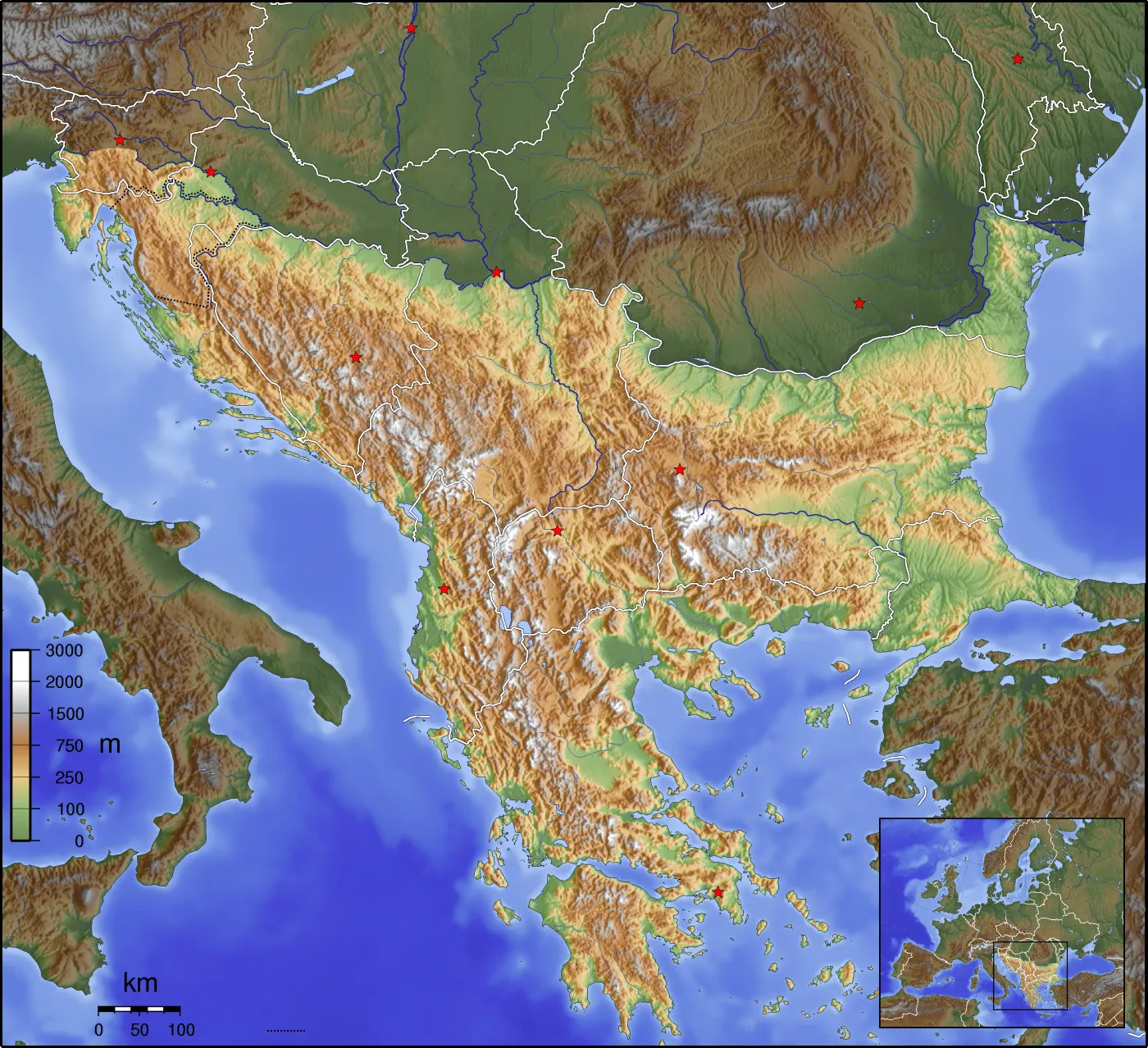
On this site, phase 1 means six Balkan countries: Croatia, Albania, Montenegro, Bosnia and Herzegovina, Slovenia, and Serbia.
That is not the whole peninsula. Greece, Bulgaria, Romania, North Macedonia, and Kosovo sit in the wider conversation. A later pillar will unpack the word. For a first holiday, six countries is already too many.
Treat them as neighbours with different rules, not as one market.
Slovenia and Croatia are EU and Schengen. Albania, Montenegro, Bosnia and Herzegovina, and Serbia are not. Days in the last four do not use your Schengen 90. Days in Croatia and Slovenia do, shared with the rest of the area. Money and entry rules sit in the sections below.
Languages do not travel as one package. Croatian, Bosnian, Serbian, and Montenegrin are closely related. Slovene is related but not the same. Albanian is a different language family. Do not assume a Croatian phrasebook will get you through Albania. English is common in tourist centres and thinner off the main streets.
Season first: coast, mountains, or cities
The first filter is not “which country looks best.” It is what the weather and the crowds will do to the trip you think you booked.
The Adriatic coast — Dalmatia, the Bay of Kotor, the Albanian Riviera — runs on Mediterranean time. July and August are hot, expensive, and full. Dubrovnik is the extreme case: Respect the City caps cruise calls at two ships and 4,000 passengers a day, and the port still expected more than 661,000 cruise passengers in 2026 (Port Authority, reported July 2026). The Old Town is a small walled circuit. Midday in August is a queue. Go early, go late, or come in May, June, or September.
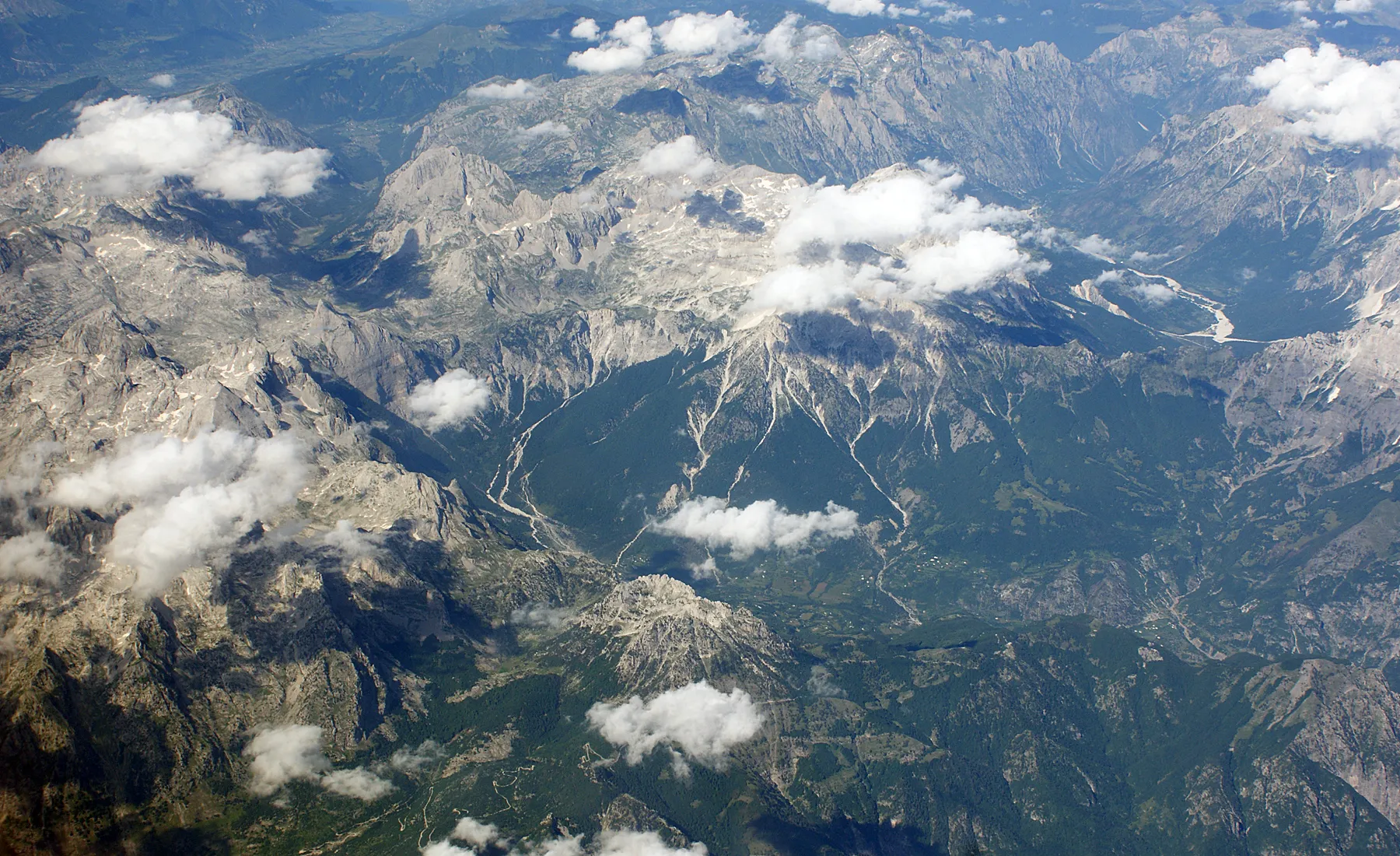
Inland cities are a different clock. Sarajevo and Belgrade get hot in July, but they are not cruise ports. Mountains are a third climate. The Julian Alps, Durmitor, and the Albanian Alps (Theth, Valbona) can throw storms, late snow, or closed passes. UK advice for Slovenia flags sudden extreme storms and road closures. A July coastal trip and a May alpine trip are not interchangeable.
Wildfire is a planning fact. The UK FCDO notes fires in Croatia’s hot, dry summers and in Albania from April to October. In mid-August 2026 a coastal fire near Omiš killed at least one person and forced large evacuations (BBC News). Watch alerts. Treat road closures as real.
Coast and swimming: late May–June or September (sea is warmer in September). Cities: April–June or September–October. Mountains: July–September for high trails; June or September for fewer people. Shoulder months need a weather plan.
If you can only travel in August: do not centre the trip on Dubrovnik Old Town at 11:00. Base in Split or inland, overnight in Dubrovnik, or skip the Croatian coast for Albania, Bosnia, or Serbia.
Pick one landscape, then the countries on it. Coast: Croatia plus maybe Montenegro or Albania. Mountains: Slovenia, northern Albania, or Durmitor. Cities: Serbia and Bosnia and Herzegovina.
How long: 7, 10, 14, and 21 days — with 1–2 bases
A Balkans itinerary should count sleep places, not countries.
Rule: one new bed every three or four nights. Two bases in a week. Three in two weeks. Transfer days are not sightseeing days. A “three-hour” border bus in July is often a half-day.
7 days
One country, or two if they share a short border.
Coast: Split as the only base, with one island day if the ferry fits. Or Dubrovnik plus Kotor: two beds, two countries, one border. FlixBus lists Dubrovnik–Kotor at 1 hour 50 minutes on a clear run. In July–August the crossing regularly adds an hour or more. Plan a morning departure and an empty afternoon.
Inland: Sarajevo three nights, Mostar three nights. Train about two hours; bus about two and a half. That is a real week. It is not “the Balkans.” Do not add Tirana to a Dubrovnik week. That is a travel day, not a hop.
10 days
Two countries, two bases, maybe a third night at the far end.
Classic loop: Dubrovnik (three nights) → Mostar (two) → Kotor (three), plus a buffer night. Mostar–Dubrovnik is commonly 3–4 hours by bus including the border. Do not put a flight after that bus on the same day.
Northern 10: Ljubljana plus one Slovenian nature base (Bled or Bovec), then Zagreb or Istria — all Schengen, two landscapes.
Albania 10: Tirana plus Sarandë, or Tirana plus Shkodër for the Alps. That is Albania, not a six-country sampler. See things to do in Albania once you have dates.
14 days
Three countries in a line. Not six.
- Southern arc: Split or Dubrovnik → Mostar/Sarajevo → Kotor. Two Croatian nights, four in Bosnia, four in Montenegro, two spare for buses.
- Albania plus neighbours: six to seven nights in Tirana plus Riviera or Alps, then Kotor (three) and Dubrovnik (two). The Albania–Montenegro border is a travel day. Do not book a 16:00 Kotor check-in after a 09:00 Tirana bus.
- Northern arc: Slovenia (four nights, two bases) → Zagreb or Istria (three) → Split (four). Stay inside Schengen until you choose Bosnia.
Fourteen days is long enough to enjoy places. It is not long enough to “see the Balkans.”
21 days
Join two clusters: Slovenia plus the Croatian coast, then a flight or long bus to Sarajevo and Mostar. Or Belgrade → Sarajevo → Mostar → Dubrovnik → Kotor, three to four nights in each cluster. The Belgrade–Bar railway earns a day: about 11 hours on the 2026 Srbijavoz / ŽPCG timetable (night train year-round; a day train in the June–September window). Confirm times before you lock a hotel.
Twenty-one days still does not require all six hubs.
Sketch the route on the free map before you buy flights →
Getting around the Balkans: bus, car, ferry, train — and borders
There is no single “Balkans transport system.” There is a bus network with holes, a few good trains, seasonal boats, and rental cars that hate extra countries.
Buses and furgons
Buses are the default between cities and across borders. Belgrade–Sarajevo, Sarajevo–Mostar, Mostar–Dubrovnik, Dubrovnik–Kotor, and Tirana–Shkodër are ordinary coach legs. Online timetables are often incomplete, especially in Albania. Buy at the station the day before if the website looks empty.
You will often get off at the border, walk two controls, and get back on. Summer queues at Adriatic crossings are commonly reported at 1–3 hours. Treat that as a buffer, not a promise. Keep the passport in a pocket, not the hold.
In Albania, a furgon is a private 12-to-15-seat minibus on a fixed route. It leaves when full. No published timetable. Cash. Useful for medium hops; a poor tool for a locked itinerary. For Theth or Valbona, ask the guesthouse. Tirana does not have one downtown station for every bus — confirm the terminal the evening before.
Cars, ferries, trains
A car is the right tool for national parks, the Albanian Riviera, Durmitor, and a Slovenia loop. It is the wrong tool for Dubrovnik Old Town, Split in August, or Kotor’s lanes. Cross-border hire is a contract problem: many Croatian rentals restrict or surcharge Bosnia, Montenegro, Serbia, and Albania. Get it in writing. Check insurance, vignettes (Slovenia and Croatia), winter tyres in the mountains from November to April, and whether you need a Green Card.
The Pelješac Bridge (opened 2022) lets you drive Split–Dubrovnik without entering Bosnia. Some coaches still use the Neum corridor, which means exiting and entering Schengen twice. Carry the passport anyway. Do not drive rural Albania at night (UK advice: poor surfaces, unmarked works, vehicles without lights). Finish the transfer in daylight.
Ferries matter on the Croatian coast. Jadrolinija runs car ferries; Krilo and similar operators run faster foot-passenger catamarans. Seasonal, and peak sailings sell out. Check the operator for your date. Italy–Albania ships are a way to arrive, not a hop between phase-1 countries.
Trains are patchy. Sarajevo–Mostar is about two hours (confirm ŽFBH). Belgrade–Bar is about 11 hours, the useful Serbia–Montenegro through-line. Slovenia and northern Croatia are closer to ordinary European rail. There is no useful train from Dubrovnik to Split, or from Croatia into Albania.
Borders, Schengen, visas
Slovenia has been in Schengen since 2007. Croatia applied the full acquis from 1 January 2023. Their 90 days in any 180-day period are shared with the rest of Schengen. Albania, Montenegro, Bosnia and Herzegovina, and Serbia each have their own clock — about 90 days for many US, UK, and EU passports, counted separately. US citizens may stay in Albania up to one year without a residency permit (US State Department). UK citizens are on 90 days in 180 there (FCDO). Those two facts are not interchangeable.
The EU Entry/Exit System (EES) has been fully operational since 10 April 2026. Non-EU travellers give biometrics at Schengen external borders, including Croatia’s land lines with Bosnia, Montenegro, and Serbia. Slovenia–Croatia is internal Schengen. Temporary checks can still appear. Carry the passport.
ETIAS, the planned pre-travel authorisation, is not in operation as of late August 2026; the official EU site says no applications are being collected. Check travel-europe.europa.eu/etias before you fly. Do not pay a reseller.
Typical short-stay picture for US, UK, and EU tourists (verify for your passport):
| Country | EU | Schengen | Usual visa-free idea |
|---|---|---|---|
| Slovenia | Yes | Yes | 90/180 Schengen pool |
| Croatia | Yes | Yes | 90/180 Schengen pool |
| Montenegro | No | No | often 90 days in 180, own clock |
| Bosnia and Herzegovina | No | No | often 90 days in 6 months, own clock |
| Serbia | No | No | often 90 days, own clock; register stay |
| Albania | No | No | UK 90/180; US up to 1 year per State Department |
Hotels usually register you in Montenegro, Bosnia, and Serbia. In a private apartment that job may fall on you or the host. Missing it can mean a fine.
Kosovo and Serbia (2026; Kosovo is not a phase-1 hub): Serbia does not treat Kosovo crossings as international entry points. UK and US advice: Serbia → Kosovo → Serbia works if you already hold a Serbian entry stamp from a recognised crossing. If you fly into Pristina, do not expect to walk into Serbia at Merdare — exit via Montenegro or North Macedonia. UK advice still notes isolated stamp cancellations. Enter Serbia first if both are on a future trip. Many countries want three months’ passport validity beyond the day you leave; some want a passport issued less than 10 years ago.
Money and daily costs by country
Pay in the local currency. Cards are widely used in Croatia, Slovenia, and much of coastal Montenegro. Carry cash in Bosnia (BAM), Serbia (RSD), and Albania (ALL), especially outside hotels. ATMs beat border kiosks.
Bosnia’s mark is pegged: 1 euro = 1.955830 BAM (Central Bank of Bosnia and Herzegovina, checked 29 August 2026). The Serbian dinar and Albanian lek float. Look up the rate the week you go. Do not use a mental “100 lek to the euro” shortcut.
Daily budgets below are estimates, not official figures — 2025–2026 traveller reports of visitor prices, not local household indexes. Peak July–August on the Croatian and Montenegrin coast sits at the top of each band. Shoulder season and inland sit lower. Per person, per day, flights excluded.
| Country | Currency | Budget / hostel-style (estimate) | Mid-range private room (estimate) |
|---|---|---|---|
| Albania | ALL | €30–50 | €60–100; Riviera in August higher |
| Bosnia and Herzegovina | BAM | €30–50 | €60–100 |
| Serbia | RSD | €35–55 | €70–110 |
| Montenegro | EUR | €40–65 | €80–130 on the Bay of Kotor in peak |
| Croatia | EUR | €55–90 | €100–160 on the coast in peak |
| Slovenia | EUR | €55–90 | €100–150 around Bled and Ljubljana |
The cost mistake is stacking seven Dubrovnik-peak nights onto a budget built from a Sarajevo hostel blog. Mix the expensive coast with inland nights, or go in May or September. Intercity bus fares move with season and operator — check the ticket, do not memorise a number from this page.
Safety, in one section
For ordinary city and coast travel, the daily risk is petty theft, bad driving, heat, and summer fire — not a 1990s war-zone fantasy.
Pickpockets work tourist streets, buses, and stations in all six countries (FCDO, repeatedly, for Albania, Croatia, Serbia, and Bosnia). Keep the passport on you at borders. Use licensed taxis. Croatia has reported sexual assaults in unlicensed or informal cabs.
Driving is the serious risk in Albania. UK advice calls it hazardous: poor rural surfaces, erratic driving, unmarked works. Read Is Albania safe to visit?. Do not paste Bosnia’s mine map onto Albania.
Bosnia and Herzegovina still has landmines and unexploded ordnance from 1992–1995. Cities and major roads are largely clear. UK, US, and Australian advice is the same: stay on hard surfaces and marked paths; do not wander into abandoned buildings, woods, or old front lines. That belongs to Bosnia (and, more narrowly, to some remote Albanian hills near Kosovo). It does not belong in a Dubrovnik paragraph.
Wildfires are common in hot months. Follow closures. Alpine storms in Slovenia can shut a pass the same afternoon you planned to drive it.
Check current FCDO or State Department pages for your nationality. Buy insurance that covers the actual activities — hiking, scooters, swimming off rocks — not just a hotel clinic.
Six country snapshots (start here)
Each hub is a door, not a trophy. Pick two.
Croatia — islands, walls, peak prices
Most booked, most seasonal. Euro, EU, Schengen. Ferries from Split and Dubrovnik. Zagreb is a different trip from Hvar. Come in June or September, or accept July–August rates. Inland parks need timed entries in season.
Start here: Croatia travel hub.
Albania — coast, Alps, a different language
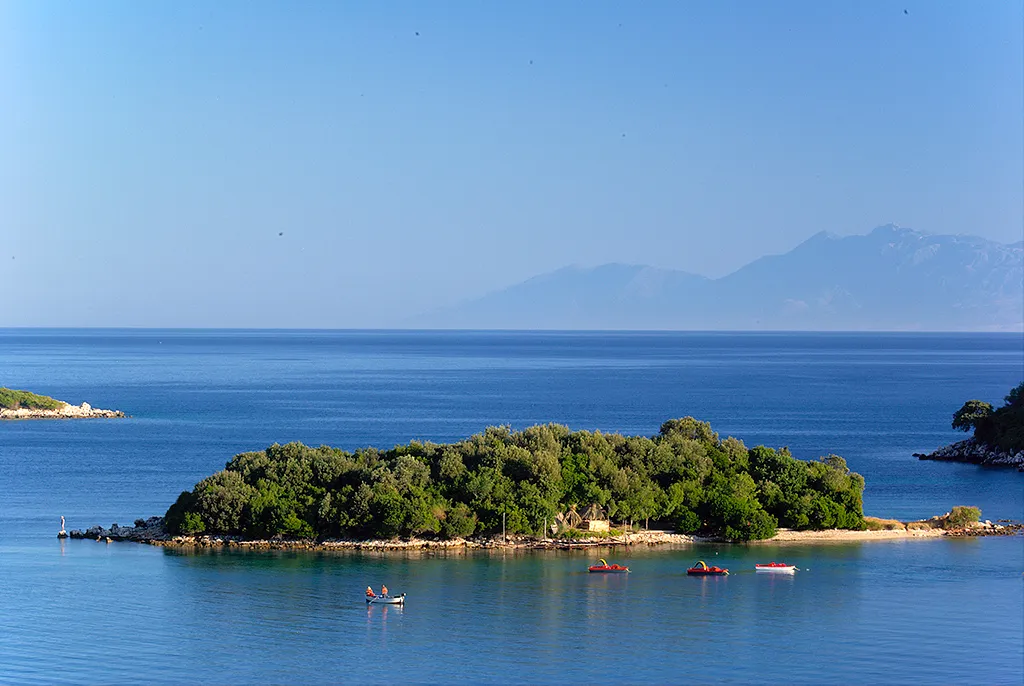
Your money goes furthest here, with the least “one bus app” simplicity. Lek, not euro. Furgons. Tirana as a hub, then the Riviera or the northern mountains — not both in four days. US stay rules are generous; UK rules are 90/180. Driving is the safety topic.
Start here: Albania travel hub. Then Is Albania safe? and things to do in Albania.
Montenegro — small map, two trips
Kotor and Durmitor are not a Tuesday and a Thursday. The Bay is coastal and euro-priced. The north is a mountain park. Buses cover the coast; a car or a tour covers Durmitor. Dubrovnik is next door — convenient, and slow at the border in August.
Start here: Montenegro travel hub.
Bosnia and Herzegovina — the inland hinge
Sarajevo and Mostar are the two bases that make a Balkans itinerary feel like a trip. Pay in BAM, not euros, except at the peg. Buses and one good train. Stay on marked paths outside town.
Start here: Bosnia and Herzegovina hub.
Slovenia — compact, Alpine, Schengen
Ljubljana plus one nature base is a complete first week. Euro, EU, Schengen. Easy to bolt onto Croatia. Storms and Bled crowds are the planning problems, not borders.
Start here: Slovenia travel hub.
Serbia — the overland hub
Belgrade is a city break and a bus station with onward legs to Sarajevo, Montenegro, and the south. Dinar, not euro. If a later trip adds Kosovo, read the stamp section above before you draw the line.
Start here: Serbia travel hub.
What to skip on a first trip
Skip six countries in seven days. You will collect stamps. You will not see much.
Skip a same-day Mostar tour from Dubrovnik as your only Bosnia plan. Sleep in Mostar.
Skip Dubrovnik at cruise noon as the centre of the trip. Overnight, or go to Split, or come in June.
Skip a Croatian rental car “for the whole Balkans” without reading the contract. Skip a night bus plus an 08:00 walking tour.
Skip assuming one SIM, one language, one card. Get an eSIM that works outside the EU if you leave Croatia/Slovenia. Carry some BAM, RSD, or ALL as soon as you cross.
Skip a Kosovo–Serbia combo that starts in Pristina.
Key takeaways
- Landscape first, then country. Season is the filter.
- Sleep in 1–2 places per week. A summer border bus is a half-day.
- Six phase-1 countries: two Schengen (Slovenia, Croatia), four not. Four currencies. Pay local.
- Buses do most of the work. Cars are for parks and the Albanian coast.
- Visa-free for many US/UK/EU passports is a starting point. EES is live. ETIAS is not, as of August 2026. Verify your own document.
- Safety is mostly theft, driving, heat, and fire. Bosnia mine advice is for Bosnia. Albania has its own page.
Download the free Balkan Route Map and draw two bases before you buy the second flight.
FAQ
How many days do you need in the Balkans?
Seven days is one country or two neighbours. Ten to fourteen days is a first trip. Twenty-one days joins two clusters. More countries than that, at these lengths, is a bus tour.
Which Balkan countries should I visit first?
Match the season. Coast: Croatia, then Montenegro or Albania. Cities: Serbia and Bosnia. Alps: Slovenia or northern Albania. Do not start with all six.
Do I need a car?
No, not for city-to-city. Yes, if you want Durmitor, the Albanian Riviera’s coves, or a Julian Alps loop without tours. Check cross-border rental rules before you pay.
Is the Balkans in Schengen?
Partly. Slovenia and Croatia are. Albania, Montenegro, Bosnia and Herzegovina, and Serbia are not. Days in the last four do not use your Schengen 90.
Do US or UK citizens need a visa?
Usually not for short tourism in these six, with stay limits that differ by country. US citizens have a longer Albania allowance than UK citizens. Confirm with the embassy and travel.state.gov or gov.uk.
How much does a Balkans trip cost per day?
Estimates, 2025–2026 visitor prices: about €30–55 a day hostel-style in Albania, Bosnia, or Serbia; €55–90 in Croatia and Slovenia; mid-range private rooms from about €60 inland to €100–160 on the Croatian coast in peak summer. Month and bed matter more than the average.
Is it safe?
For standard tourist routes, with ordinary city caution. Extras: driving (especially Albania), summer wildfires, alpine storms, and — in Bosnia — marked paths because of leftover mines. Read Is Albania safe? rather than generalising.
Can I visit Kosovo and Serbia on the same trip?
Yes, if you enter Serbia first at a recognised crossing and keep that stamp. If you enter Kosovo from a third country, do not plan to continue directly into Serbia. Check current US and UK advice; the rule was still in force in 2026.
Sources
Official / primary
- European Commission, Entry/Exit System (EES) — fully operational 10 April 2026. https://home-affairs.ec.europa.eu/policies/schengen/smart-borders/entry-exit-system_en
- EU Travel — ETIAS (check live status; not in operation as of Aug 2026 reporting). https://travel-europe.europa.eu/etias
- European Commission, EU countries and the euro (Croatia 1 Jan 2023; Slovenia 1 Jan 2007). https://economy-finance.ec.europa.eu/euro/eu-countries-and-euro_en
- Croatian MFA, Schengen application from 1 January 2023 and 90/180 calculation. https://mvep.gov.hr/services-for-citizens/consular-information-22802/visas-22807/visa-requirements-overview-22879/22879
- US State Department, Albania — US citizens up to one year without residency permit. https://travel.state.gov/content/travel/en/international-travel/International-Travel-Country-Information-Pages/Albania.html
- US State Department, Serbia — 90 days; Kosovo entry guidance. https://travel.state.gov/content/travel/en/international-travel/International-Travel-Country-Information-Pages/Serbia.html
- US State Department, Bosnia and Herzegovina — 90 days; landmines. https://travel.state.gov/content/travel/en/international-travel/International-Travel-Country-Information-Pages/BosniaandHerzegovina.html
- US State Department, Montenegro — 90 days in 180; registration. https://travel.state.gov/content/travel/en/international-travel/International-Travel-Country-Information-Pages/Montenegro.html
- US State Department, Croatia / Slovenia advisories — visa-free 90 days; Croatia Schengen; land checks with BA/ME/RS. https://travel.state.gov/en/international-travel/travel-advisories/croatia.html
- GOV.UK, Albania entry — UK 90 days in 180. https://www.gov.uk/foreign-travel-advice/albania/entry-requirements
- GOV.UK, Albania safety — driving, pickpockets, wildfires, remote northern mines. https://www.gov.uk/foreign-travel-advice/albania/safety-and-security
- GOV.UK, Croatia safety — pickpockets, wildfires, taxis. https://www.gov.uk/foreign-travel-advice/croatia/safety-and-security
- GOV.UK, Bosnia and Herzegovina safety — landmines, crime, wildfires. https://www.gov.uk/foreign-travel-advice/bosnia-and-herzegovina/safety-and-security
- GOV.UK, Slovenia safety — storms, floods, wildfire in heat. https://www.gov.uk/foreign-travel-advice/slovenia/safety-and-security
- GOV.UK, Serbia entry — stamps; Kosovo routing. https://www.gov.uk/foreign-travel-advice/serbia/entry-requirements
- GOV.UK, Kosovo entry — Serbia does not recognise Kosovo crossings. https://www.gov.uk/foreign-travel-advice/kosovo/entry-requirements
- Central Bank of Bosnia and Herzegovina, EUR/BAM 1.955830. https://cbbh.ba/CurrencyExchange/?lang=en
- IATA, EES and ETIAS overview (carrier-facing; defer to EU sites). https://www.iata.org/en/about/worldwide/europe/new-entry-requirements-eu/
Reporting and operator-adjacent (used for crowds, season, transport character, budget ranges)
- Euronews Travel, 24 July 2026 — Dubrovnik cruise cap (2 ships / 4,000 pax); 2026 volume via Port Authority. https://www.euronews.com/travel/2026/07/24/respect-the-city-how-dubrovnik-is-managing-overtourism-without-losing-its-charm
- BBC News — August 2026 Dalmatia wildfire (Omiš / Lokva Rogoznica). https://www.bbc.co.uk/news/articles/c9342wn2x27o
- Euronews Travel, 12 August 2026 — ETIAS launch date removed / not in operation. https://www.euronews.com/travel/2026/08/12/europe-has-officially-delayed-the-roll-out-of-the-etias-travel-permit-indefinitely
- The Independent — ETIAS date removed from official site. https://www.independent.co.uk/travel/news-and-advice/etias-travel-permit-launch-date-delayed-b3032506.html
- Seat 61 — Belgrade–Bar 2026 times (~11 hours; seasonal day train). https://www.seat61.com/belgrade-to-bar-railway.htm
- FlixBus — Dubrovnik–Kotor scheduled duration 1 hr 50 mins. https://global.flixbus.com/bus-routes/bus-dubrovnik-kotor
- Smartraveller, Kosovo — Serbia border rule (updated 2026). https://www.smartraveller.gov.au/destinations/europe/kosovo
- Traveller budget bands (estimates only): https://www.balkanguide.net/blog/balkan-country-budget-breakdown ; https://croatiaguidebook.com/planning/balkans-trip-cost-compared/ ; https://www.thebalkanguide.com/practical/balkans-travel-costs/
- Albania furgons / terminals (field description): https://albaniaguidebook.com/transport/how-to-get-around-albania/
- Montenegro euroisation (unilateral, 2002): https://en.wikipedia.org/wiki/Montenegro_and_the_euro and Government of Montenegro EU accession chapter 17. https://www.eu.me/en/poglavlje-17-ekonomska-i-monetarna-unija/